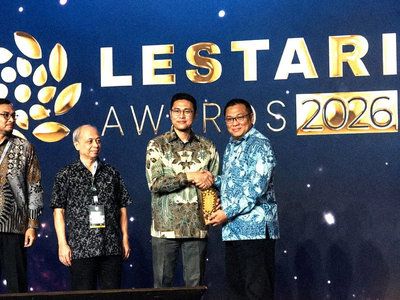
West Sumbawa, 26 January 2026 - The nearly two-decade wait has finally come to an end. In December 2025, SMPN 1 Maluk and SDN 2 Seteluk in West Sumbawa (KSB), West Nusa Tenggara, officially achieved the status of National Adiwiyata Schools. This achievement is not merely an accomplishment for two schools, but a sign of broader change: how education can become the foundation for shaping environmentally friendly behavior through the collaboration of government, society, and the private sector.
The Adiwiyata Program is an initiative by the Ministry of Environment (KLH) to encourage schools to build a sustainable culture of environmental care. This program does not stop at physical cleanliness but targets policies, daily habits, and the school’s role as an agent of change in its surroundings.
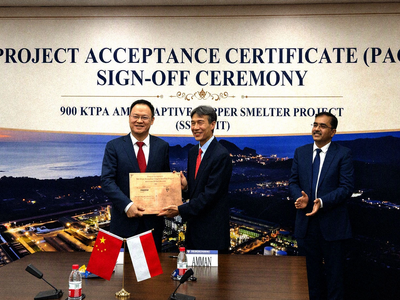
The success of SMPN 1 Maluk and SDN 2 Seteluk did not happen instantly. Behind this achievement was a consistent mentoring process, one of which was supported by PT Amman Mineral Nusa Tenggara (AMMAN). As one of the largest copper and gold mining companies in Indonesia, AMMAN played a strategic role through the School Waste Management Program (PPSS) and various Clean Up Day initiatives involving the school community and the surrounding society.
“Great change always starts with small, consistent steps. Through PPSS, we want to build new habits from an early age, where students and parents are accustomed to sorting waste and protecting the environment, while also opening opportunities for school empowerment. We hope schools have good sustainability implementation and healthy lives, while also being at the forefront of preserving environmental sustainability,” said Priyo Pramono, Vice President of Policy & Permitting as well as Vice President of Social Impact at AMMAN.
This program is implemented in six schools in KSB and is designed to encourage students, teachers, and other school members to manage waste independently. The approach is consistent yet straightforward: making waste sorting at the source a habit, processing organic waste, and turning the school environment into a real learning space for sustainability.
From an environmental perspective, this program contributes to reducing waste sent to landfills (TPA). Socially, the capacity and awareness of school members have increased, supported by concrete facilities such as compost houses and source-based waste sorting systems. Furthermore, this approach also opens up economic opportunities for schools.
“Adiwiyata is a long-term investment. We are not just planting trees at schools, but we are planting awareness in the minds of students so that they become the guardians of the earth in the future,” said Bambang Supriadi, Environmentalist and Founder of CV Tamu Baru as the implementing partner of the School Waste Management Program.
One tangible result is POSTA (Our School's Organic Fertilizer), an organic fertilizer produced from school waste management. Through this management, schools not only reduce waste but also sell the product, sustain the operational costs of the compost house, and support other school activities. This circular economy concept is the key to program sustainability after the mentoring period ends.
Moving forward, the achievements of SMPN 1 Maluk and SDN 2 Seteluk are expected to be a spark for other schools in West Sumbawa. With the support of regional policies, schools have an excellent opportunity to transform not only as academic education centers but also as spaces for the growth of a generation that is more caring and wise towards the environment.